10624 : The Sorcerer's Apprentice (Dukas) — Music Appreciation Unit | Upper Elementary

- Shipping:
- Calculated at Checkout
- Seller:
- MusicKamp




Description
If you've ever wished a single lesson could hold a room full of upper elementary students spellbound — from the first quiet notes to the crashing chaos of the brooms — this unit was built for that moment.
As a National Board Certified Music Teacher with two master's degrees and 22 years of PK–6 classroom experience, I designed this unit to take students beyond "listen and enjoy" and into real music appreciation: identifying orchestration, dynamics, tempo, timbre, and repetition as the tools a composer uses to tell a story — using Paul Dukas's The Sorcerer's Apprentice as the perfect, story-driven entry point.
What's Included (60 pages):
- Character study pages for the Apprentice, the Sorcerer, and the Enchanted Brooms
- Bassoon Instrument Spotlight + coloring page + Instrument Detective listening activity
- Five core musical elements lessons, each with a teacher-led page and a matching student response page: Repetition, Building the Music (Layers & Orchestration), Dynamics, Tempo, and Timbre
- Musical Contrast: Control vs. Chaos comparison activity
- "How Does Music Create Magic?" synthesis page tying all five elements together
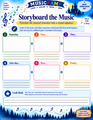
- Creative response pages: Mood + Color, Draw What You Hear, Compare Two Sections, Listening Journal, Storyboard the Music
- Composition extensions: Create a Character Theme, Create Your Own Musical Spell, Create a Sound Story
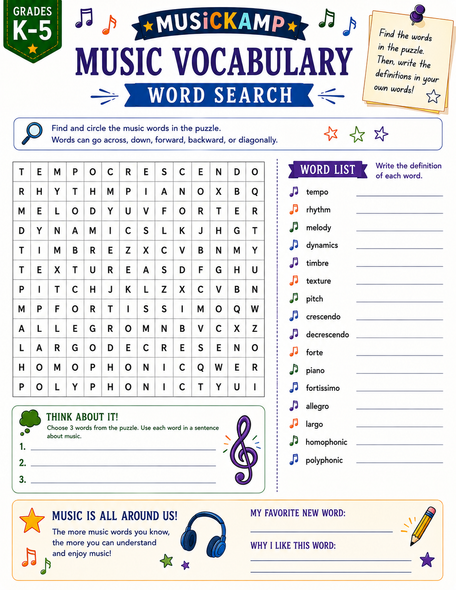
- Complete vocabulary set: Teacher Reference sheet, student Vocabulary page, Vocabulary Match, and Vocabulary Word Search
- Culminating Project: two-page planning and execution guide for students to compose their own musical story
- Student Musical Story Concert invitation (editable-style template)
- Student Performance Response Sheet and Student Final Reflection sheet
- Certificate of Completion
- Classroom Display Set: Broom, Water, Vocabulary, and Story/Music Concept cards
- Bonus: full-page character posters, Broom & Water posters, and a Sorcerer's Apprentice trading card set with backs
Perfect For:
- General music classes, grades 3–6
- Substitute-friendly listening lesson days
- Composer study and program-building teachers looking for a plug-and-play unit
- Concert programming tie-ins (build toward a real Student Musical Story Concert!)
- Music appreciation stations or center rotations
What Makes This Different: Most listening lessons stop at "how does the music make you feel." This unit teaches the actual vocabulary and mechanics — dynamics, tempo, timbre, repetition, orchestration — as a connected system, then hands students the same toolkit to compose their own musical spell or sound story. It's appreciation and creation in one sequence.
Format note: This is a digital PDF resource for printing or digital display. No audio recording of the Dukas piece is included — pages are designed to pair with any legal streaming or library copy of the piece.
Related Products
Related Products


10624 : Carnival of the Animals | Complete Music Appreciation Unit | Saint-Saëns

10624 : Music Vocabulary Poster | Visual Word Wall for Elementary Music & ELL Students

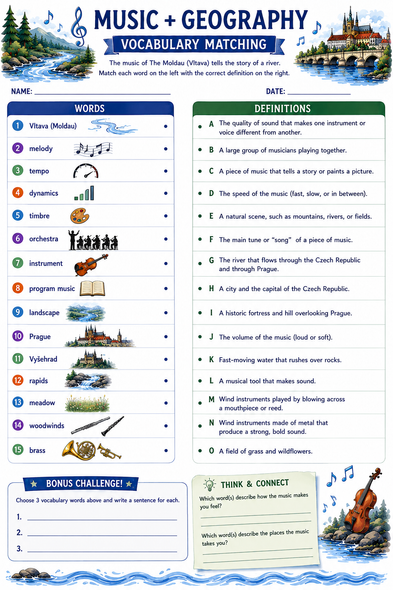
10624 : The Moldau (Vltava) by Smetana — Complete Music Listening Unit | Program Music

10624 : Pictures at an Exhibition Complete Unit | Mussorgsky Music & Art |