
10624 : Organizing the Chaos: Visual Schedules & Routines for the Inclusive Music Classroom
- Shipping:
- Calculated at Checkout
- Seller:
- MusicKamp






Description
Does your music classroom feel chaotic when students with Autism Spectrum Disorder struggle with transitions, unpredictable routines, or the ambiguity of what's coming next? You're not alone — and the research has answers. This resource pack brings together visual activity schedule strategies, peer buddy tools, and classroom-tested routines to help your students with ASD feel safe, prepared, and ready to participate in music class.
Written by a National Board Certified music educator with firsthand classroom experience, this guide translates peer-reviewed research into practical, print-and-go tools designed specifically for the music room.
⭐ WHAT'S INCLUDED:
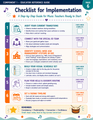
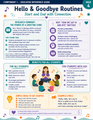
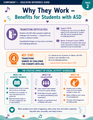
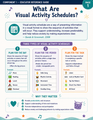
✔ Educator Reference Guide (6 pages) — Covers the research behind visual activity schedules, transition strategies, building student independence, hello/goodbye routines, a real classroom case study, and a step-by-step implementation checklist. The "why" behind every strategy is explained in plain, music-teacher-friendly language.
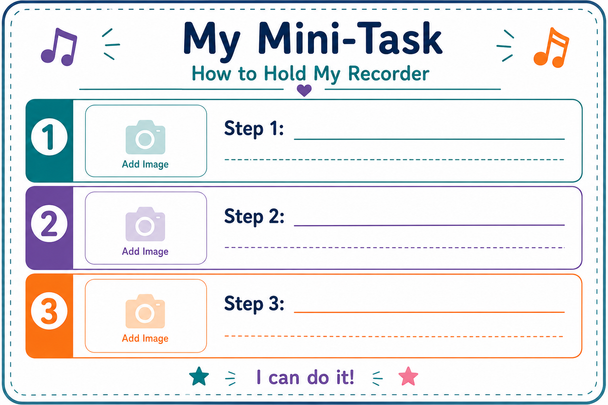
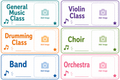
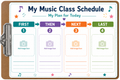
✔ Visual Schedule Template Pack (4 templates) — Includes a Daily Music Schedule Board ("Today in Music We Will…"), an individual Period Activity Card for students to use at their seats, a Task-Level Mini-Schedule for step-by-step activity guidance, and Instrument-Specific Class Label Cards for your door, schedule board, and student clipboards.
✔ Peer Buddy Tip Cards — 6–8 research-backed tip cards for setting up and sustaining peer buddy systems in the music room, including pairing guidelines, how to model expectations, and how to fade adult prompts over time.
✔ "Questions to Ask Your Team" Planning Sheet — A collaboration and meeting-prep tool that helps you connect your music room strategies to the whole-school support system. Bring it to your next IEP team meeting or check-in with your special education colleagues.
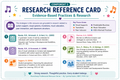
✔ Research Reference Card — A clean, professionally formatted bibliography you can keep in your binder, share with your administrator, or reference when communicating with parents and the special education team.
?? WHO THIS IS FOR:
This resource is designed for:
- Elementary music teachers who have students with ASD in their general music, band, orchestra, or chorus classes
- Special area educators looking for research-backed, music-specific inclusion strategies
- Music therapists working in school settings
- Special education teachers collaborating with music educators
- Music education students and new teachers building their inclusive teaching toolkit
No special education degree required. If you teach music and have students with ASD, this resource is for you.
? RESEARCH BASE:
Strategies in this resource are grounded in peer-reviewed research, including:
- Banda & Grimmett (2009) — Activity schedule implementation and fading support
- Banda & Grommett (2008) — Visual schedules as independence tools
- Darrow (2009) — Adapting instruction for students with autism in music settings
- Kern, Wolery & Aldridge (2007) — The impact of greeting songs and hello/goodbye routines
- Odom (2019) — Peer-based interventions for students with ASD
- Saggers (2016) — Transition difficulties as a top challenge for students with ASD
This isn't a list of generic tips — it's evidence-based practice translated into tools you can use in your music room tomorrow.
? HOW TEACHERS WILL USE IT:
- Read the Educator Reference Guide to understand the "why" behind each strategy
- Print and post the Daily Schedule Board in your music room so students know exactly what's coming
- Set up individual Period Activity Cards at student seats or send home for preview
- Place Instrument-Specific Label Cards on your classroom door so students know what kind of music class is happening before they walk in
- Use the Peer Buddy Tip Cards to set up meaningful peer partnerships in your class
- Bring the Planning Sheet to your next special education team meeting to start the conversation about whole-school support
⏱️ WHY TEACHERS LOVE IT:
✔ Everything is print-and-go — no design work needed ✔ Templates are ready to fill in with your own class schedule and student names ✔ The implementation checklist walks you step-by-step through getting started ✔ Strategies work across ALL music settings — general music, band, orchestra, choir ✔ Written by a practicing music educator who uses these exact strategies in her own classroom ✔ Backed by peer-reviewed research — feel confident sharing it with your admin and IEP team
? A NOTE FROM THE AUTHOR:
I'm Cindy Galvin — a National Board Certified music teacher and M.M. Ed. who has been teaching at Amagansett School in New York for years. I developed these strategies after working with students with ASD in my own music program, and I've seen firsthand how a predictable, visually supported routine can transform a student's experience in music class. I created these tools because I needed them — and I think you will too.
Related Products
Related Products

10624 : First Then Board for Music Class | Visual Schedule Free Music Classroom Support

Morning Routine Checklist | Bedtime Routine Visual Schedule | Home Routines Chart

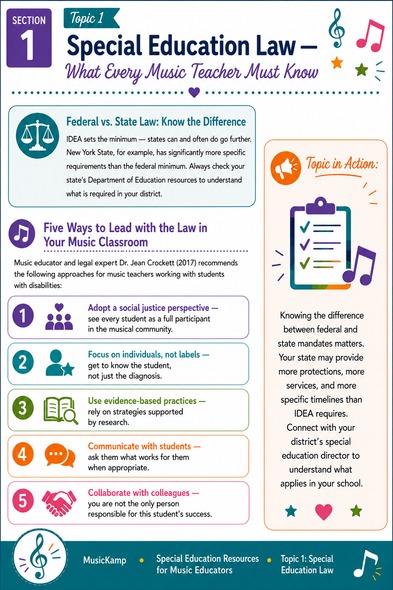
10624 : Special Education Resources for Music Educators — The Complete Inclusive Music


Kids Afternoon Visual Schedule Checklist | Occupational Therapy Daily Routines
