
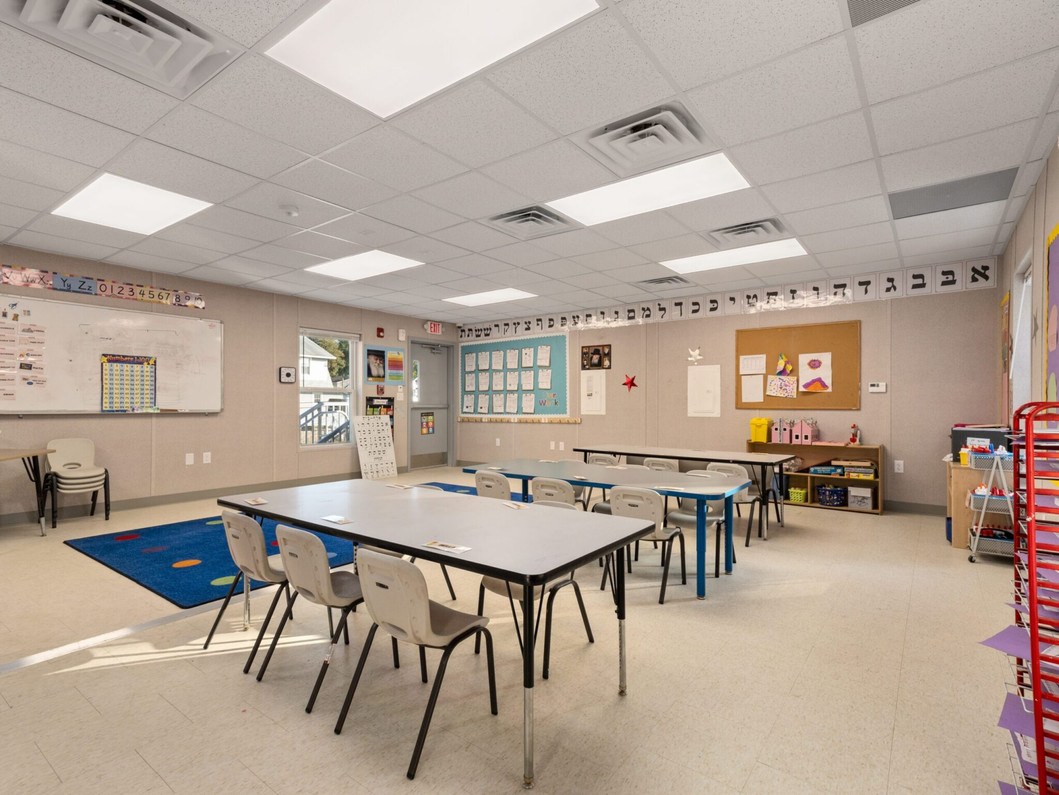
Portable Classrooms
Teaching in a Portable Classroom: What Changes and What Doesn't
Portable classrooms are a regular part of the infrastructure at many schools in the United States. In a 2023 survey by the National Center for Education Statistics, 31 percent of public schools reported having at least one portable building in use, or nearly one in three. For many teachers, that makes a portable their workplace for an entire school year.
They aren't all the same, though. Portable school buildings range from a single standalone classroom to double units or clusters of classrooms that function as one more section of the campus.
For teachers, working in a portable can change some aspects of day-to-day organization. Here are the main differences and similarities when it comes to teaching in a modular classroom.
Learning Objectives and Planning
These stay the same. The type of construction does not affect the learning objectives or the curriculum content. A portable classroom is not a reason to lower expectations for the group or rewrite the lesson plan.
In this sense, the only things that might change are adaptations to the space. That is, how the classroom is arranged or how students move before, during, and after classes.
Classroom Capacity
Like any classroom, a portable one is designed for a specific number of students. Nadler Modular, which rents, leases, and sells modular classrooms across most of the eastern United States, states that its single classroom accommodates up to 36 students and its double classroom up to 67.
Resources and Equipment
Connectivity depends on the infrastructure installed, not the type of construction. A portable classroom can have the same internet coverage as any classroom in the main building. The same applies to temperature and acoustics.
What does change compared to a classroom in the main building is that, when the modular classroom has its own system, it’s easier to identify and resolve issues.
Safety and Accessibility
ADA accessibility standards apply to both permanent and temporary buildings, and the U.S. Access Board guidelines list temporary classrooms among their examples.
The same applies to safety. The school’s emergency plan applies equally to modular classrooms. The only things that may change are the starting point for drills and the route to the assembly area, but the protocol remains the same.
Entrance and Location
There is a change here because the classroom functions as a separate unit, with its own entrance independent of the main building. When it is located away from the building, students must go outside to reach shared spaces such as restrooms or cafeterias, and these trips may take longer.
These are organizational matters that can be addressed through planning and do not affect what happens inside the classroom. Routes and travel times are known in advance and can be taken into account from the beginning.
Connection to the School Community
A portable classroom remains part of the school, even when it is physically separate. Both students and teachers follow the same requirements and participate in school activities. Spontaneous interaction may decrease, but that depends more on how the school is organized.
When evaluating a portable classroom, the most important factors are how it is equipped and where it is located. With adequate equipment and a good connection to the rest of the school, these types of buildings solve space problems without changing the way students are taught.
Recent Posts
-
Portable Classrooms
Teaching in a Portable Classroom: What Changes and What Doesn't Portable classrooms are a regular pa …Nov 6th 2026 -
How Teachers Can Use Sound Buttons to Make Learning More Fun and Memorable
How Teachers Can Use Sound Buttons to Make Learning More Fun and Memorable Students rarely remember …Oct 30th 2026 -

How to Support Students Dealing With Academic Stress
How to Support Students Dealing With Academic Stress A student’s life is full of adventures, but it …Oct 16th 2026