
Best Math Apps for Homeschooling: The Ones Kids Actually Open
Best Math Apps for Homeschooling: The Ones Kids Actually Open
The best math app for your homeschool is not the one with the most content or the longest feature list. It is the one your child opens tomorrow without being asked. In a classroom, other students and a teacher supply the momentum. At the kitchen table, the math app has to carry that motivation on its own, which is why plenty of well-reviewed math apps still end up abandoned by week two. The right math app makes daily learning feel like something kids choose, not something you enforce.
So this roundup of the best math apps is sorted by the job each app does in a real homeschool day, not by a vague overall score. Free and paid are mixed on purpose. Quick version:
- MathHero (free, five levels a day): the daily arithmetic driver kids play like a game.
- Khan Academy (free): the full-curriculum spine, K through high school.
- Prodigy Math Game (free core, paid extras): grade-linked practice inside an RPG.
- IXL (paid): the diagnostic that finds the exact gap.
- SplashLearn (paid): early-grades practice with printable worksheets attached.
- Beast Academy (paid): the challenge track for a kid who finishes fast.
- DragonBox (varies): concept-first games for the "why."
- XtraMath (free): three minutes a day for math facts.
Prices below were checked in late September 2026 and change often, so confirm the current price in-app or on each site before you subscribe.
Why motivation decides which math app wins at home
Ask one question before you compare a single feature: will you have to push, or will your child ask to play? Every plan for daily math practice runs into that wall. Stars and badges bolted onto worksheets wear off within days. A story, a hero the child owns, and rewards to earn keep pulling week after week. That gap between motivation designed in and motivation glued on is what separates the best math apps from the ones that gather dust. Kids learn fastest when the learning is fun, so the strongest math apps make building math skills feel like a game, not a chore.
The math apps below fall into three jobs: practice layers that build fluency, fuller programs that cover a grade of curriculum, and enrichment that deepens understanding. Most homeschooling parents end up running two or three at once, since no single app teaches every child every skill, and different students need different tools. One builds the daily habit, one covers scope, one checks progress. And none of them replaces you sitting down for two minutes to say, show me what you did today. An app can teach the facts and drill the skills, but you still teach the why, and that is what teaching math at home comes down to.
The 8 best math apps for homeschooling
These math apps were chosen on four things a homeschooling parent actually weighs: whether kids open the app willingly, what math it covers, what it costs per child, and how honest it is about its own limits. The list spans ages 5 through the upper elementary grades, and mixes game-based learning with straight practice so you can match the app to the student in front of you. Some work as a full learning program; others teach one narrow set of skills and do it well. A few teach concepts through fun games, a few lean on teaching math by repetition, and a few produce the kind of records a homeschool student needs. Kids ages 5 to 10 are the sweet spot for most, though several stretch to older kids.
1. MathHero
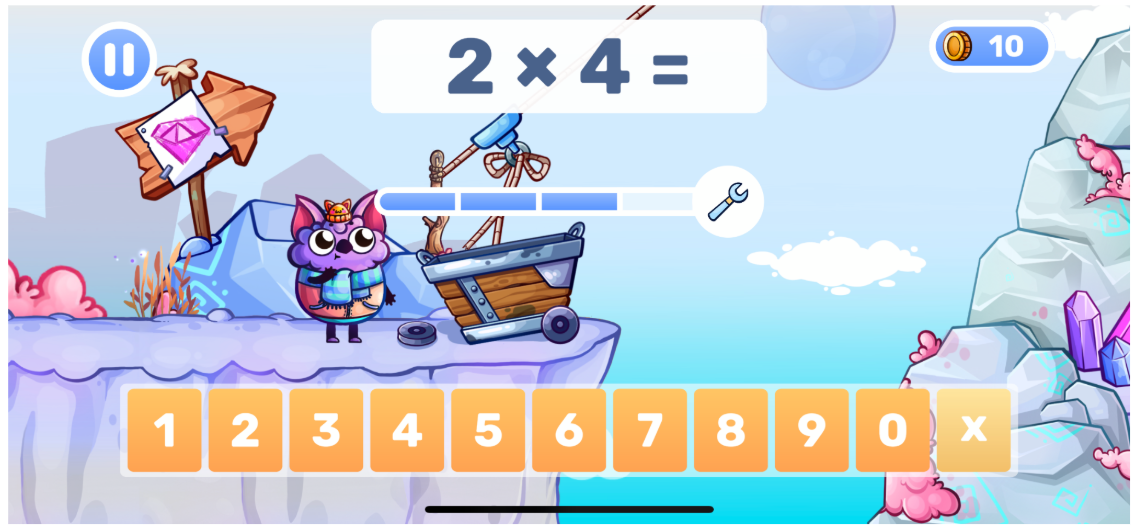
The daily driver. MathHero is a story-driven adventure where solving short sets of math is how you win. Kids build, battle slimes, rescue trapped animals, earn coins, and kit out their own hero, and every one of those actions runs on addition, subtraction, times tables, or division. The math is the gameplay, not the toll a child pays to reach the fun.
It runs from a child's first addition facts through subtraction, multiplication tables, and division, roughly ages 5 to 10 (grades K to 4). The real standout for a multi-kid house is control: you pick the specific topic, the difficulty, a guided path or open practice on a chosen skill, typed answers or multiple choice, even the monster speed. Each child gets a separate profile, so siblings at different skill levels share one app without tripping over each other.
The free mode is honest, which is rare in this category. The whole game is completable free, with no ads and nothing locked behind a wall. The only limit is five levels per day, which is a sensible dose of daily practice anyway. A subscription with a free trial lifts that cap. Honest limits worth knowing: it begins at first addition within 10, so it will not teach counting or number recognition from scratch, and it stops at core arithmetic, so no fractions, geometry, or video lessons. US store ratings sit at Google Play 4.6 (46k) and App Store 4.7 (11k), and the app runs on iOS and Android devices. The line parents repeat most is some version of "he doesn't notice he's learning," and the flip from math-avoider to asking-to-play shows up again and again in reviews.
2. Khan Academy
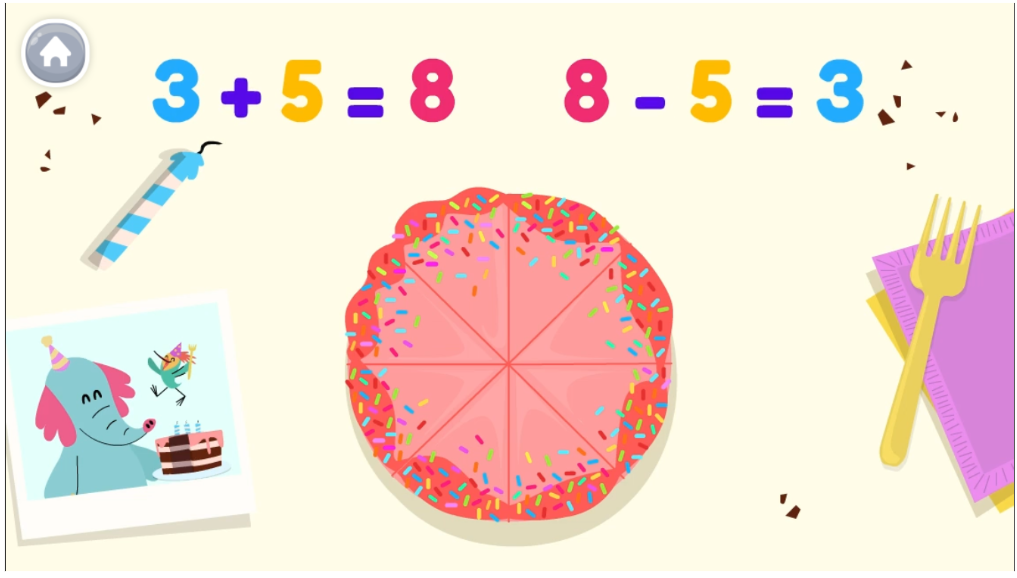
The free backbone. Khan Academy is completely free, with no paid tier and no ads, and it carries math from the early grades through high school, with mastery tracking and parent accounts that show a child's progress. For your youngest, Khan Academy Kids (free, ad-free, ages 2 to 8, built to Common Core standards) handles early number sense, counting, and first operations. Older kids move up into the main Khan app, which also covers language arts, science, and more, self-paced so a student works at the child's pace. Its video lessons walk students through concepts step by step, from counting up toward algebra, so it can teach a topic directly when a child is stuck. Between the two, you get a legitimate free spine for a homeschool curriculum. The honest catch: Khan leans on video lessons and reads more like school than play, so a reluctant younger child usually needs it paired with a more playful learning app.
3. Prodigy Math Game
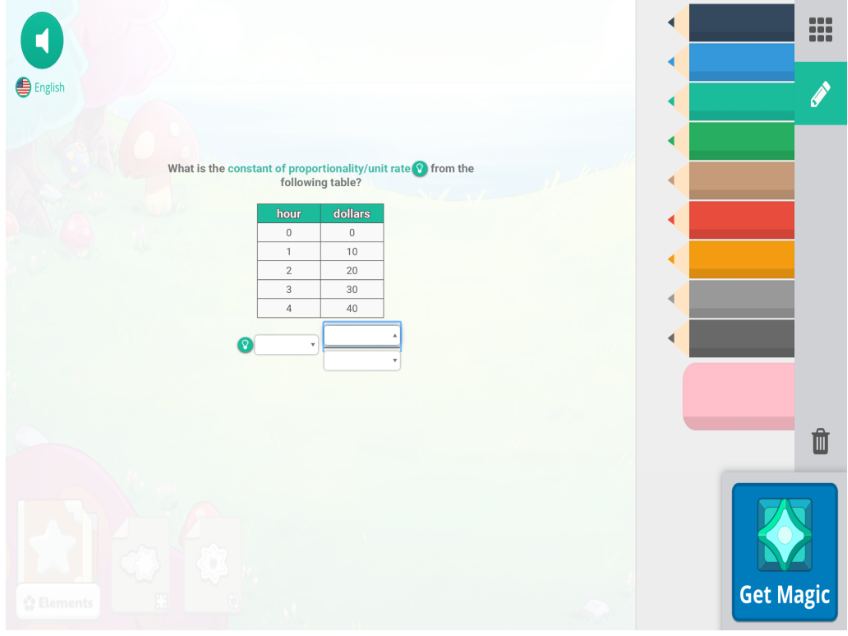
Grade-aligned practice hiding inside a role-playing game. In Prodigy Math, every battle is a math question, the core game is free, and the questions map to grade 1 to 8 standards. Prodigy Math lists more than 45,000 questions aligned to state and Common Core curricula, and a Plus or Ultra plan adds Prodigy Science. Kids earn points, pets, and gear as they solve problems, and parents can set goals and follow progress skill by skill. A Core membership runs about $9.95 per month per child, with annual billing lowering the effective monthly cost; the membership unlocks in-game extras, not the math itself. The reward loop is genuinely engaging, which is what a resistant learner needs. For a lot of kids the fantasy world is the difference between doing math and refusing to, and the learning rides along with the fun. Fair warning that many parents find the in-game store a little pushy.
4. IXL
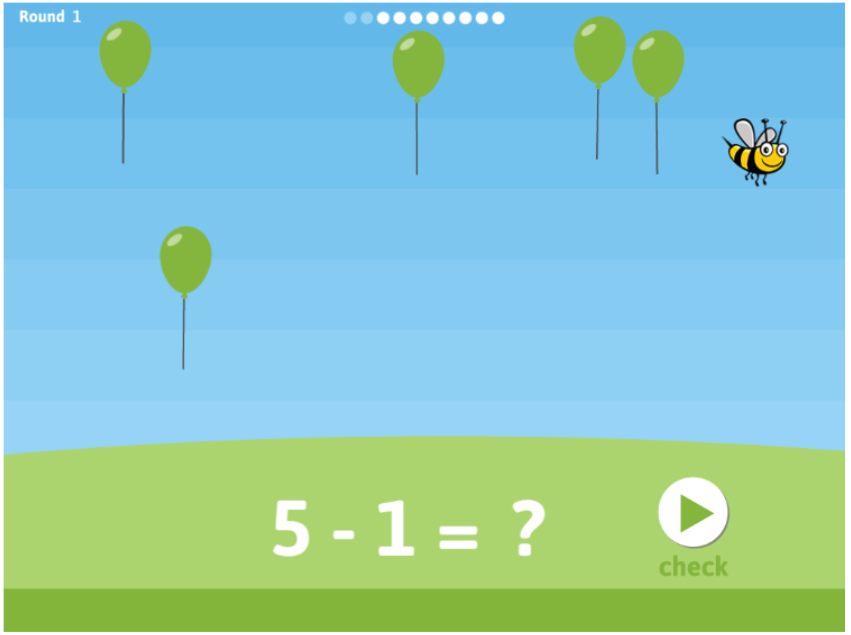
Find the gap, then close it. IXL spans PreK through grade 12, well past elementary, with practice aligned to K-12 standards across math, language arts, science, and more. Its Real-Time Diagnostic pinpoints where a student actually sits, the SmartScore rewards steady accuracy over lucky guesses, and the parent analytics become detailed progress reports you can keep for records. Family plans start at $9.95 per month or $79 per year for a single subject like math, with each extra child about $4 per month. This is practice and diagnostics, not story: kids who like a mastery bar chase it, kids who don't call it repetitive drilling. Reach for IXL when a student needs more practice on one specific skill and you want data to prove it landed. It also flags which skills a student has mastered and which need work, and it shows how a student handles unfamiliar math problems, so you can aim the next few lessons instead of guessing.
5. SplashLearn
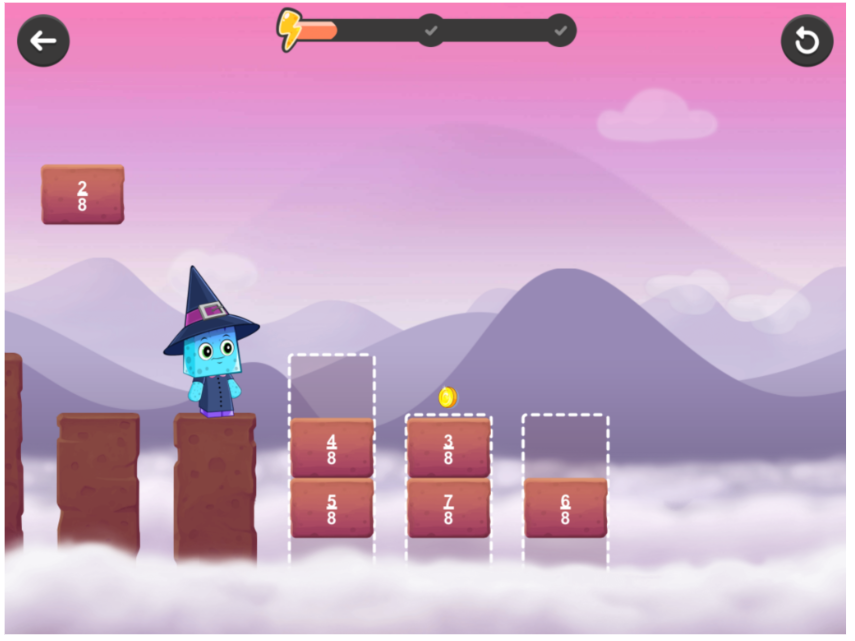
The early-grades practice library with paper attached. SplashLearn covers Pre-K to grade 5, built to Common Core, with thousands of interactive games plus printable worksheets, so screen work and off-screen practice come from one program. It reaches across number sense, place value, addition, subtraction, and early multiplication, and the printables help you cut screen time on the days you want less of it. Pricing starts around $7.49 per month billed annually after a 7-day trial, and it is free for teachers running it in a single classroom. It is strongest in the early grades; most students age out near grade 5.
6. Beast Academy
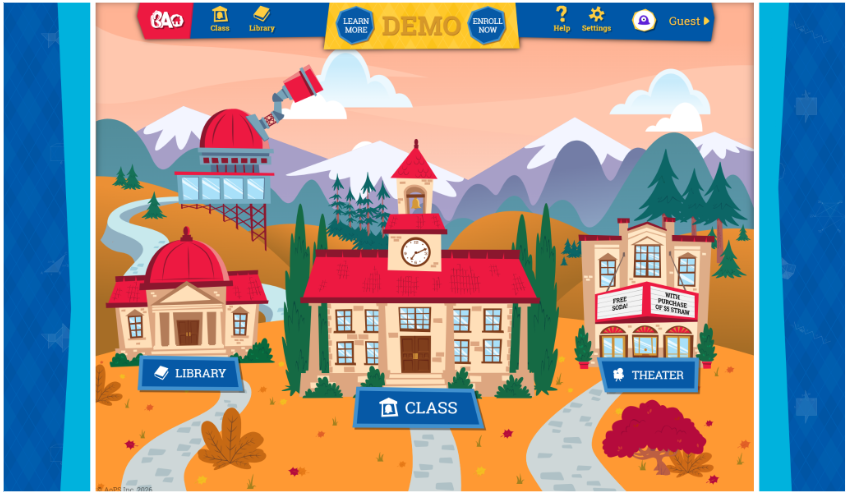
The rigor track for the kid who finishes everything early. Built by Art of Problem Solving, Beast Academy teaches grades 2 to 5 through comic-book guides and puzzle-heavy problems, more than 20,000 of them across 1,000-plus lessons, so strong students meet math concepts several steps deeper than a standard program. The online program is $15.99 per month or $99.99 per year for the first child, with sibling discounts; print books and bundles are priced separately. This one is for a student who craves challenge and enjoys wrestling with puzzles, not a student who is struggling, and it expects more from you as the teacher. Beast Academy has the ability to stretch kids who have outgrown standard curricula, and its comic lessons stay engaging even when the math gets genuinely hard.
7. DragonBox

Concept first, drill later. DragonBox is a suite of learning games (Numbers, Big Numbers, Algebra, Geometry) that bury the idea inside the gameplay, so a child manipulates a concept before ever meeting the notation. The algebra titles quietly teach real equation-solving, and the geometry concepts land through building rather than definitions, which is where the deep understanding comes from. Titles run roughly ages 4 to 14. DragonBox is now a Kahoot company, and the pricing model has shifted: some titles are one-time purchases while others sit inside a Kahoot!+ Family subscription, so check the current price on the App Store, Google Play, or Kahoot before buying. The learning games run on iOS and Android devices, and later titles push into fractions and early algebra, so a curious kid can keep going. Treat it as enrichment for understanding, not a full practice program.
8. XtraMath
Three minutes a day for math facts. XtraMath is a nonprofit (501(c)(3)) fact-fluency program: short daily sessions that push addition, subtraction, multiplication, and division facts toward automatic recall and build the mental math skills that free a child's attention for harder problems later. It drills multiplication facts and the rest through quick timed prompts. The core program is free forever, with an optional low-cost premium tier for extra reports and customization. It is plain on purpose, no story and no rewards, so it works best bolted onto a more engaging math app rather than carrying the day alone.
Free math apps vs paid: what the price actually buys
You can run a real homeschool math routine on free apps alone. Khan covers curriculum scope, XtraMath builds fact fluency, Prodigy's core game handles grade-linked practice, and MathHero delivers game-based arithmetic at five levels a day. That free-app stack costs nothing and still teaches a lot of math and builds real learning.
When you do pay, you are almost always buying one of three things: a lifted cap on how much can be played (MathHero's subscription), diagnostics and detailed progress reports for record-keeping (IXL, SplashLearn), or challenge and enrichment content (Beast Academy, some DragonBox titles). Match the spend to the gap in your child's learning. Paying for progress reports you never open is the most common wasted homeschool subscription, and the best math apps for your family are not always the priciest ones. For many homeschooling parents the sweet spot is one free app for daily fun and one paid app for the diagnostics, so the learning stays cheap and the record-keeping stays easy.
How to help kids stick with math practice at home
The app does not build the habit. The schedule does, and keeping it going is on the parents. Most students need the same three things: a little every day, quick wins, and a reason to come back. A stack that works for most K-4 homeschoolers looks like this: a few minutes of fact fluency (XtraMath), then ten to fifteen minutes on a driver kids actually want to open (MathHero or Prodigy), then a weekly check on scope or gaps (Khan Academy or IXL). Short and daily beats long and weekly for mental math, every single time.
To help kids stick with it, keep the wins frequent and the sessions short, and let the child see progress they own. Watch how kids work through a set of math problems: if they slow down, the difficulty is set too high, not their motivation. The real test of whether it is working is whose idea the next session is. If it is still yours by month two, the math app is wrong, not your child. For more on turning daily arithmetic into something a kid asks for, MathHero's guide to the best ways to learn math is a useful starting point. Math is one slice of your child's education, so a little planning helps: pick the skills your child is weak on, teach the concept once, then let the app handle the reps and the learning routine.
Common questions
What is the best free math app for homeschooling?
Three cover the bases at no cost: Khan Academy for a full free curriculum, XtraMath for math facts and mental math skills, and MathHero for game-based arithmetic (free, five levels a day, no ads). Prodigy's core game is free too. Run Khan Academy for scope and one of the game-based math apps for daily motivation, and you have taught a full week of math to most students without spending a cent.
Do math apps replace a full homeschool curriculum?
Mostly no. Khan Academy comes closest to a full course a student could learn from start to finish. Most of the rest, including MathHero, Prodigy, XtraMath, and DragonBox, are practice or enrichment layers, while IXL and SplashLearn sit in between with standards-mapped practice across subtraction, multiplication, and division and beyond. Use these math apps to build fluency and motivation, and keep one curriculum spine underneath so the grade-level scope is covered. No single app teaches an entire curriculum, so let your books carry the learning sequence and the concepts while the apps carry the reps and the fun.
Which math app fits which homeschooler?
A quick map for a homeschooling parent deciding today. Reluctant or math-anxious child: MathHero or Prodigy Math Game. Needs the exact gap found: IXL. Wants a free full course: Khan Academy. Finishes everything fast and wants a challenge with real puzzles: Beast Academy. Early grades plus printable worksheets: SplashLearn. Math facts still slow: XtraMath. A concept-first learner chasing deep understanding: DragonBox.
Pick the math app your kids will open tomorrow without you asking. That is the one that works.
Recent Posts
-

How to Support Students Dealing With Academic Stress
How to Support Students Dealing With Academic Stress A student’s life is full of adventures, but it …Oct 16th 2026 -

Classmates vs. Facebook vs. Instagram: How Teachers Can Keep in Touch With Former Students
Classmates vs. Facebook vs. Instagram: How Teachers Can Keep in Touch With Former Students Teachers …Oct 16th 2026 -
How Teachers Should Respond to Student Safety Concerns
How Teachers Should Respond to Student Safety Concerns Students don't always speak up directly when …Oct 9th 2026