
Numbers & Counting Flashcards | Math Skills, Addition, Subtraction & Place Value
- Grade Level:
- 3-5
- File Type:
- Seller:
- Bella & Leo




Description
Build strong early math skills with these engaging Numbers & Counting Flashcards!
This resource helps young learners develop number recognition, counting skills, and basic arithmetic through fun and interactive question-based cards.
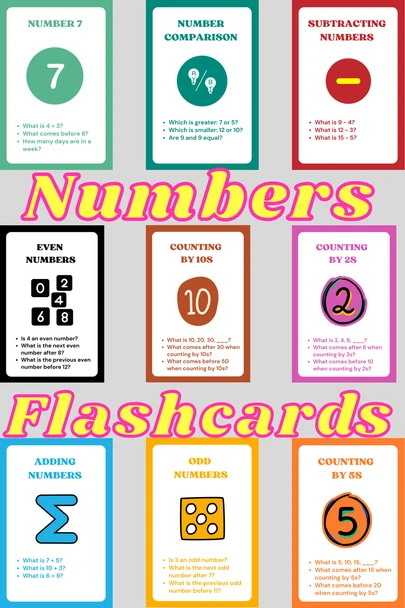
Each flashcard focuses on a specific number or concept, combining simple maths problems with real-life connections to deepen understanding. Students will explore counting patterns, odd and even numbers, addition, subtraction, and place value in a clear and engaging way.
Perfect for:
- Math centers and small group work
- Flashcard games and revision
- Homeschool learning
- Early finishers and independent practice
These cards are designed to make learning numbers fun while building confidence in foundational math skills.
? What’s Included
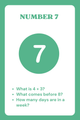
- Printable number flashcards (1–10) with simple questions and real-life connections
- Counting pattern cards (2s, 5s, and 10s)
- Core math concept cards (odd/even numbers, addition, subtraction, comparison, and place value)
- Versatile format for games, revision, and interactive learning activities
? Skills Covered
? Number Recognition & Counting Skills
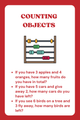
Students develop a strong understanding of numbers 1–10, including number order, sequencing, and quantity. The use of questions helps reinforce counting in a meaningful, real-world context.
➕ Basic Addition & ➖ Subtraction
Learners practice simple addition and subtraction problems, building confidence in early arithmetic. These foundational skills support future success in mathematics.
? Number Patterns & Skip Counting
Through counting in 2s, 5s, and 10s, students begin to recognise patterns in numbers. This is a key early skill that supports multiplication and problem-solving later on.
⚖️ Number Comparison & Place Value
Students learn to compare numbers (greater than, less than, equal to) and understand the value of digits within two-digit numbers. This builds early number sense and deeper mathematical understanding.
? Problem-Solving & Critical Thinking
Real-life questions encourage students to think, reason, and apply their knowledge rather than just memorising answers. This strengthens logical thinking and confidence in maths.
Related Products
Related Products


Counting Butterflies: Addition, Subtraction + Number Sense


3-digit Addition and Subtraction, Multiplication Fact Practice, Place Value, Rounding - 3rd Grade Math Games -


2nd Grade Math Games - Place Value, 2-digit and 3-digit Addition and Subtraction, and Fact Practice

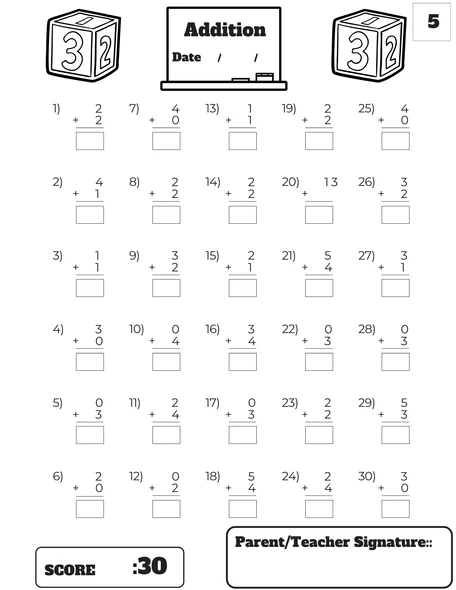
Addition & Subtraction Worksheets 0–20 | Math Practice Workbook | Life Skills

