How Commercial Cleaning Services Transform Nashville Schools
The quality of a school's physical environment directly influences student health, attendance, and academic performance. In Nashville's educational facilities, where hundreds of students and staff interact daily in shared spaces, maintaining rigorous cleanliness standards isn't just about appearances—it's a public health imperative that affects learning outcomes.
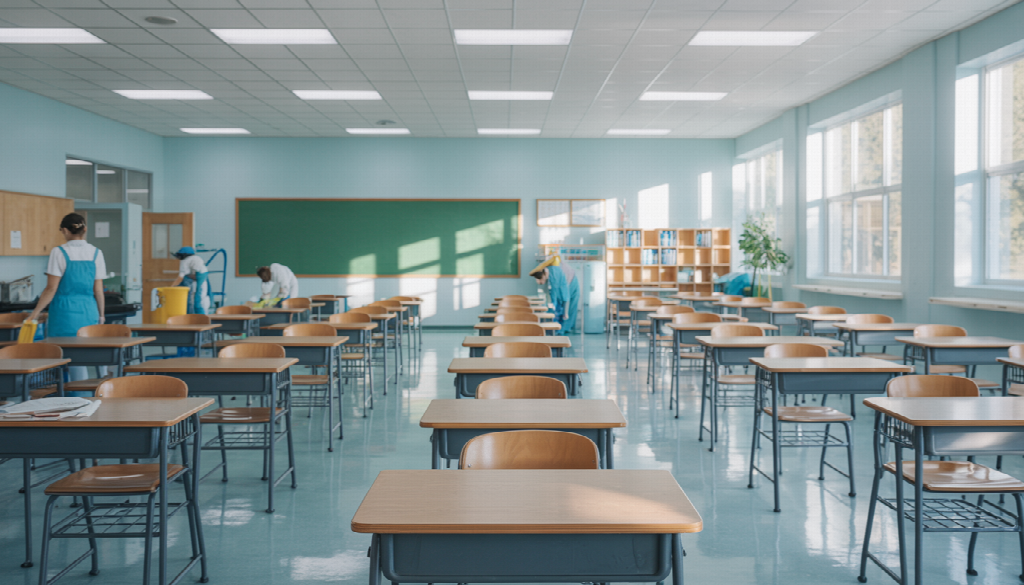
Professional commercial cleaning services have become essential partners for Nashville schools navigating heightened hygiene expectations. From advanced disinfection protocols to sustainable cleaning practices, these specialized services address the unique challenges of educational environments where high-touch surfaces, varied spaces, and vulnerable populations demand expertise beyond standard janitorial work.
Why Professional Cleaning Matters in Educational Settings
Schools present distinct cleaning challenges that generic maintenance approaches can't adequately address. The concentration of young people in enclosed spaces creates ideal conditions for pathogen transmission, while the diversity of school environments—from science laboratories to gymnasiums—requires specialized knowledge and equipment.
Proper cleaning and disinfection protocols significantly reduce absenteeism related to infectious diseases. For Nashville schools, this translates directly to improved attendance rates and uninterrupted learning.
Professional cleaning services deliver measurable advantages:
- Health protection: Systematic disinfection of high-touch surfaces reduces disease transmission by up to 80% compared to irregular cleaning schedules.
- Academic continuity: Fewer illness-related absences mean students miss less instructional time and maintain learning momentum.
- Specialized expertise: Trained technicians understand pathogen behavior, proper chemical dilution ratios, and surface-specific protocols.
- Resource optimization: Outsourcing allows administrators and teachers to focus on educational priorities rather than facility management.
- Regulatory compliance: Professional services stay current with evolving health department guidelines and safety standards.
The investment in professional cleaning yields returns that extend beyond immediate cleanliness to long-term facility preservation and community confidence in school safety standards.
Comprehensive Cleaning Solutions for Educational Facilities
Nashville's Coverall PCS commercial cleaning providers have developed service portfolios specifically designed for the complex needs of educational institutions. Competitors like Summit Facility Solutions and Anago of Nashville offer comparable programs, though each takes its own approach to staffing and scheduling around school hours. These specialized offerings address everything from daily maintenance to deep sanitization of specialized spaces.
Core services typically include:
- Daily janitorial operations: Systematic cleaning of classrooms, hallways, and common areas including trash removal, surface wiping, and floor maintenance.
- Administrative space cleaning: Tailored approaches for offices that handle sensitive documents and technology equipment.
- Athletic facility sanitization: Specialized protocols for locker rooms, gymnasiums, and equipment areas where moisture and physical contact create hygiene challenges.
- Laboratory decontamination: Strict adherence to safety protocols for science spaces handling chemicals and biological materials.
- Post-construction cleanup: Thorough debris removal and dust elimination following renovation projects to ensure spaces meet air quality standards.
- Window and glass maintenance: Regular cleaning that improves natural lighting and building appearance.
- Floor care programs: Specialized treatment for various flooring types, from tile and vinyl to hardwood and carpet.
This comprehensive approach ensures that every area of a school receives appropriate attention based on its specific function and traffic patterns.
The Critical Role of Disinfection Protocols
Standard cleaning removes visible dirt and debris, but disinfection eliminates pathogens that cause illness—a distinction that matters enormously in school settings. Professional disinfecting services employ EPA-registered antimicrobial products and evidence-based application methods that maximize pathogen elimination while minimizing chemical exposure.
Effective disinfection programs prioritize high-touch surfaces where disease transmission most commonly occurs. Door handles, light switches, desk surfaces, computer keyboards, water fountain controls, and bathroom fixtures receive frequent attention throughout the school day.
Professional services implement layered disinfection strategies that include scheduled deep cleaning during off-hours and targeted spot treatment during the school day. This dual approach maintains baseline cleanliness while addressing contamination as it occurs, particularly during cold and flu season when transmission risks peak.
Sustainable Cleaning Practices for Healthier Schools
The cleaning products used in schools matter as much as the frequency of cleaning. Traditional chemical cleaners can leave residues that trigger asthma, allergies, and other respiratory conditions—particularly problematic in environments serving children with developing immune systems.
Green cleaning programs utilize products certified by independent organizations like Green Seal or the EPA's Safer Choice program. These formulations achieve comparable disinfection results without volatile organic compounds (VOCs), harsh fragrances, or toxic residues. The Environmental Protection Agency provides detailed guidance on selecting products that protect both human health and environmental quality.
Benefits of sustainable cleaning extend beyond immediate health impacts:
- Improved indoor air quality: Low-VOC products reduce respiratory irritation and headaches commonly associated with chemical cleaners.
- Environmental responsibility: Biodegradable formulations minimize water pollution and ecosystem damage.
- Regulatory alignment: Many districts now mandate green cleaning as part of broader sustainability initiatives.
- Community confidence: Parents increasingly expect schools to prioritize non-toxic cleaning methods.
Nashville schools adopting green cleaning protocols report fewer complaints about chemical odors and improved satisfaction among staff with chemical sensitivities.
Technology-Enhanced Cleaning Efficiency
Modern cleaning equipment has evolved far beyond mops and buckets. Commercial-grade technology enables more thorough cleaning in less time while reducing physical strain on cleaning staff and improving consistency across large facilities.
Advanced equipment commonly deployed in Nashville schools includes:
- Automated floor scrubbers: These machines combine scrubbing, solution application, and water recovery in a single pass, cleaning floors more effectively than traditional mopping while using less water and chemicals.
- HEPA-filtered vacuums: High-efficiency particulate air filtration captures 99.97% of particles, including allergens and fine dust that standard vacuums recirculate.
- Electrostatic sprayers: These devices apply disinfectant in charged particles that wrap around surfaces and into crevices, ensuring more complete coverage than manual wiping.
- Microfiber cleaning systems: Advanced textiles trap and remove particles rather than spreading them, reducing cross-contamination between areas.
Technology adoption improves both cleaning outcomes and operational efficiency, allowing the same staff to maintain higher standards across larger areas.
Selecting the Right Cleaning Partner
Not all commercial cleaning companies possess the specialized knowledge and resources required for educational facilities. Schools evaluating potential partners should assess several critical factors beyond basic pricing.
Key selection criteria include:
- Educational facility experience: Providers with school-specific portfolios understand unique challenges like coordinating around academic schedules and managing security protocols.
- Service comprehensiveness: The ability to handle diverse needs—from daily maintenance to emergency response—through a single vendor simplifies management.
- Verifiable performance: References from other educational institutions provide insight into reliability, responsiveness, and quality consistency.
- Staff training and screening: Background checks, ongoing education, and clear supervision structures ensure safety and professionalism.
- Green certification: Third-party validation of sustainable practices demonstrates genuine commitment beyond marketing claims.
- Flexible scheduling: Willingness to work around school events, testing periods, and facility usage ensures minimal disruption.
- Transparent communication: Clear reporting systems and responsive account management facilitate problem-solving and continuous improvement.
Schools should request detailed proposals that specify cleaning frequencies, product specifications, and quality assurance processes rather than accepting generic service descriptions.
Long-Term Facility Preservation Through Consistent Maintenance
Professional cleaning delivers benefits that compound over years, protecting the substantial capital investments schools make in buildings and equipment. Regular maintenance prevents the gradual deterioration that occurs when dirt, moisture, and contaminants accumulate unchecked.
Consistent cleaning programs contribute to facility longevity by:
- Extending surface lifespans: Proper floor care prevents scratching and wear that necessitate expensive refinishing or replacement.
- Protecting building systems: Regular cleaning of HVAC components, light fixtures, and other infrastructure prevents efficiency losses and premature failure.
- Preventing costly damage: Early identification of maintenance issues—leaks, pest activity, structural concerns—allows intervention before minor problems become major expenses.
- Maintaining property values: Well-maintained facilities preserve community investment and support bond initiatives for future improvements.
Creating Environments That Support Learning
The connection between facility cleanliness and educational outcomes extends beyond disease prevention. Clean, well-maintained schools communicate respect for students and staff while creating physical environments conducive to concentration and engagement.
Research consistently demonstrates that facility quality influences student behavior, teacher retention, and community perceptions of school effectiveness. Nashville schools investing in professional cleaning services aren't simply maintaining buildings—they're creating conditions that support their core educational mission.
As hygiene expectations continue evolving and schools face ongoing resource constraints, partnerships with experienced commercial cleaning providers offer a practical path to maintaining the high standards that students, families, and educators deserve.
Recent Posts
-
How Teachers Should Respond to Student Safety Concerns
How Teachers Should Respond to Student Safety Concerns Students don't always speak up directly when …Oct 9th 2026 -
Best Math Apps for Homeschooling: The Ones Kids Actually Open
Best Math Apps for Homeschooling: The Ones Kids Actually Open The best math app for your homeschool …Sep 29th 2026 -
From Worksheets to Real Talk: How Students Can Build Practical English Speaking Skills
Many students know how to identify verb tenses or complete vocabulary exercises. They also know how …Sep 26th 2026